
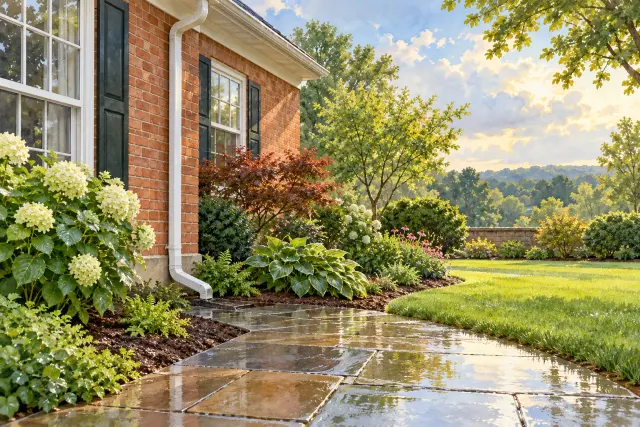
A new planting bed or patio can make a yard more useful, but the next rain may reveal the decision that deserved attention first: where the water goes. Before covering soil with paving or refreshing mulch, spend time observing how roof runoff and surface water move around your home.
This is especially useful when a landscape project shares space with a basement wall, a low doorway or an older paved area. Your observations help a professional evaluate the site; they do not establish the cause of every damp spot indoors.
Make a rain-day observation map
From a safe location, note overflowing gutters, downspout outlets, puddles, moving mulch and the route water takes over paving. Take photographs from the same places during and after ordinary rain. Stay indoors during lightning or dangerous weather, and keep away from moving water and electrical hazards.
On a simple sketch, mark the house, driveway, walks, visible drains and low spots. Record whether a puddle disappears soon after rain or remains into the next day. Describe what you saw without assuming that the nearest visible feature caused it.
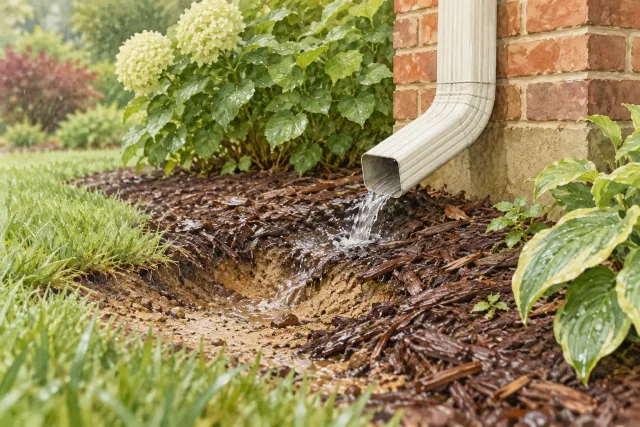
Trace the whole route
A downspout extension has an outlet, but the water continues beyond that outlet. Ask where it travels next and whether the destination is suitable. Do not redirect runoff toward a neighbor, a public walk or another vulnerable part of your property. A buried line also needs a known, lawful discharge point and a way to maintain it.
EPA’s general runoff guidance lists approaches such as rain gardens, permeable surfaces and redirecting downspouts. Its archived overview is useful for understanding options, while actual placement and sizing need current local requirements and an assessment of your soil, grading and site constraints.
Resolve drainage questions before the finish plan
Ask the landscape or drainage professional how proposed paving changes the existing water route. Request finished elevations and transitions at doors, steps and adjoining surfaces. If a patio will sit near the house, discuss the relationship to wall openings and existing drainage details.
A rain garden is not simply a low planting bed, and permeable paving is not just an attractive surface material. Ask what site evaluation, underlying construction, overflow provision and ongoing care each option needs. Have the appropriate municipal office confirm approvals for the specific work.
Separate maintenance from redesign
Have accessible gutter and drainage maintenance issues evaluated before committing to a larger intervention. Ask what can be confirmed from the surface and what needs further investigation. If someone recommends excavation, request the reason, the intended outcome and how they will protect nearby utilities and structures.
For estimates, give each contractor the same observations and project limits. Compare the complete route from collection to discharge, including restoration of lawn, beds or paving. A shorter description can conceal a very different amount of work.
Keep a record after the project
Save the final layout, product information and maintenance instructions. Return to your original observation points after comparable rainfall and document the result. Ask the installer how to report persistent pooling or erosion, and which seasonal tasks belong to you.
If the concern includes indoor dampness, our article on summer basement humidity explains why a damp feeling and bulk water entry deserve different questions. Bring both your indoor notes and outdoor photographs to a relevant local professional.