

The first floor feels comfortable, but the bedroom upstairs never quite catches up. Turning the thermostat lower may leave one room chilly while another still feels stuffy. Before buying equipment, make the problem easier to describe. A useful comfort plan begins with the room, the time of day and the conditions that make it worse.
For a Lehigh Valley homeowner considering a late-summer improvement, those observations can help separate a small maintenance issue from a larger assessment of the house. They also give contractors something more specific to work with than “the air conditioner is not strong enough.”
Keep a short room-by-room record
Over several ordinary days, note which spaces feel uncomfortable, whether doors are open or closed, and when direct sun reaches the windows. Record the thermostat setting and any simple room thermometer readings with the time and location. Compare similar conditions; a sunny afternoon and a cool rainy morning answer different questions.
Include how the room is used. A home office with electronics running all day presents a different pattern from a bedroom used mainly at night. This record is evidence to discuss, not a home test that establishes equipment size or identifies a hidden defect.
Check what the room is doing to airflow
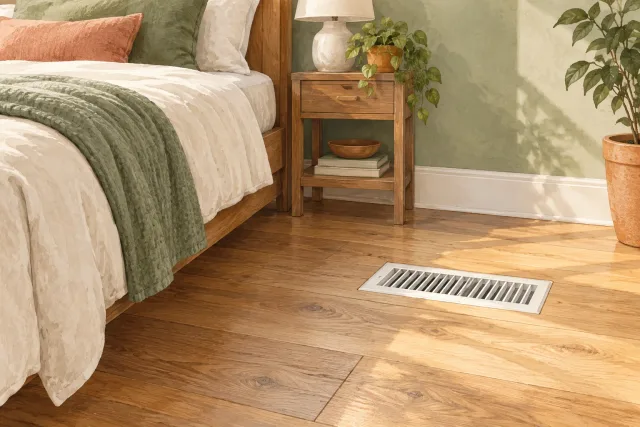
Look for furniture, curtains or stored items covering supply or return grilles. Photograph anything you cannot identify and ask the HVAC contractor what it serves. Follow the system manufacturer's filter instructions, and bring the filter type and replacement history to the appointment.
Avoid experimenting with major damper changes or closing multiple vents to force air upstairs. Ask the professional to explain the intended air pathways, including what changes when bedroom doors close. The goal is to understand the system as installed before adjusting it.
Look beyond the equipment label
The Department of Energy describes a home energy assessment as a way to identify and prioritize improvements. Ask what the proposed assessment includes and whether it will consider insulation, leakage and the relationship between the building and its heating and cooling equipment.
For example, a room under an attic may deserve attention beyond its supply register. ENERGY STAR’s attic guidance treats sealing and insulation as coordinated work. That does not mean every hot room needs more insulation; it means an equipment-only quote may leave important questions unanswered.
Ask for a diagnosis before an upgrade menu
Bring your notes to an HVAC visit and ask what the contractor will inspect or measure. Useful questions include: Are supply and return paths suitable? Are accessible ducts damaged or disconnected? What is the basis for the recommended equipment capacity? Would an energy assessment resolve questions the service visit cannot?
If proposals include zoning, a separate room system or replacement equipment, ask each contractor to describe the problem that option addresses. Request the installation scope, controls, electrical work, service access and expected limitations in writing. A more detailed proposal makes it easier to understand why one option costs more than another.
Choose the next step that answers a question
Your next purchase may be a service visit, an assessment or a targeted repair rather than a complete replacement. Agree on how you will judge the result: the same room, at a similar time, under comparable conditions. Keep the original notes for that follow-up.
For a broader look at the house, read our mid-year home improvement checkup. Then use the YHR professional directory to start a conversation with a relevant local professional about the observations you have collected.